Music Culture of
South Africa
Adrien Tan
Irvine Valley College
Music 21
Assignment #2
In general, the westerners’ concept of music does not exist for the
Africans - “honest observers are hard pressed to find a single indigenous group
in Africa that has a term congruent with the
usual Western notion of ‘music’.” Most Africans seem to refer to all acts
related to singing, dancing, movements, or playing instruments to be a
collective bundle and not to be separated from each other or other forms of
art. My essay is concentrating on South
African music culture since my mother was born in Port Elizabeth, South
Africa.
Her parents and their parents were overseas Chinese born and raised in South Africa. My mother also encourages me to learn more
about a famous singer from that country – Miriam Makeba, a.k.a. Lady Smith, Mama Africa and the Empress of African Song. Cape Town Magazine considers “Miriam Makeba is beyond
dispute one of South Africa's
true legends.”
The ‘music’ of South Africa is typical of other African countries in that
a combined use of voice, drums, string instruments, percussion instruments, and
dancing make up the whole bundle. These
are sometimes called primitive or tribal by early western visitor. “Authentic African music - the traditional
music of the black peoples of Africa - is
little known abroad. The non-African listener can find the music strange,
difficult, and unattractive; and therefore often concludes that it is not of
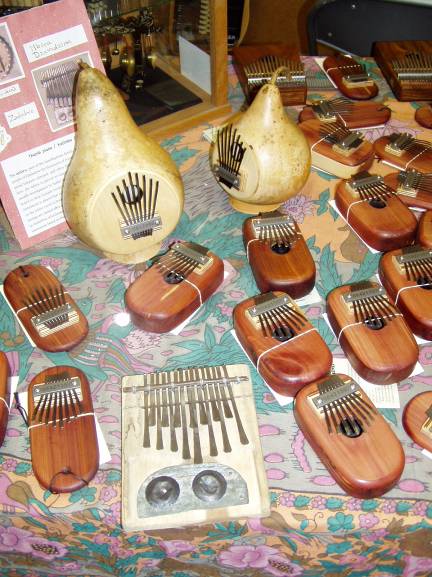
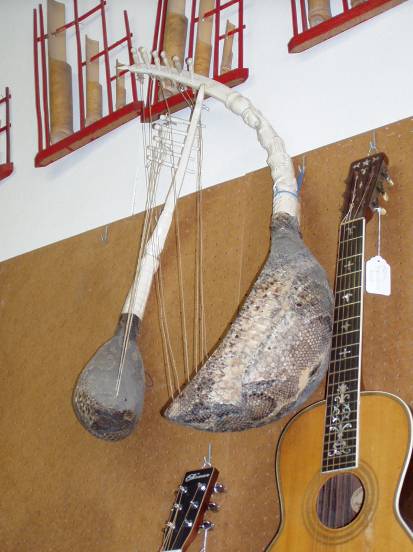
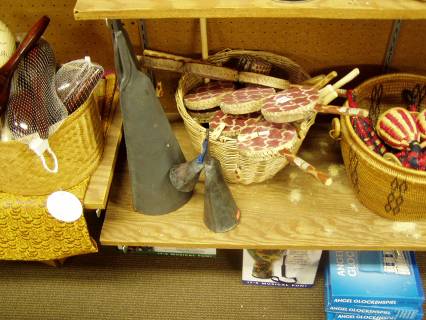
interest.” The instruments of South Africa are the Ankle Rattle,
Hand Rattle, Ornamental Drum, Ramkie (4-string instrument), Side-Blown Horn,
Thumb Piano, Xylophone and
the Slit Gong. Some photos from the
website can be reviewed in the Appendix.
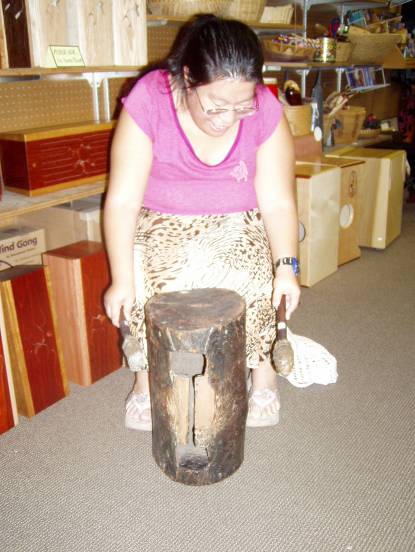
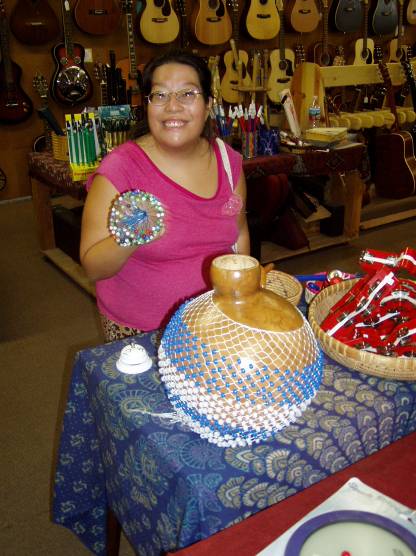
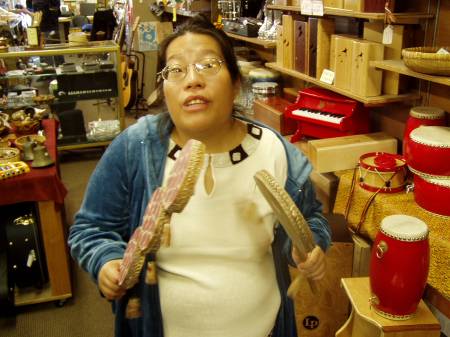
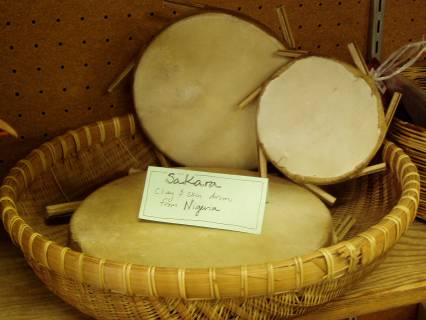
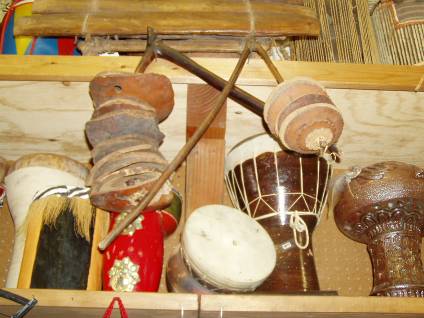
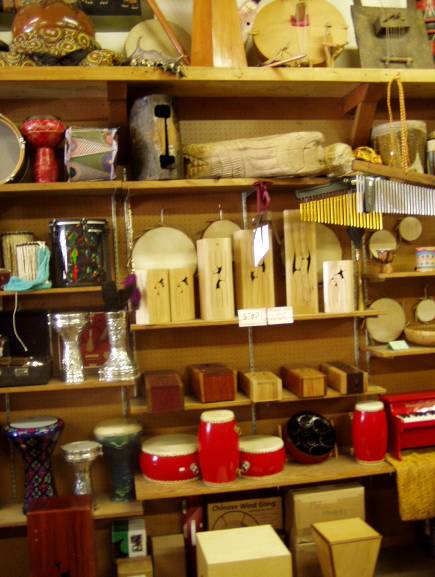
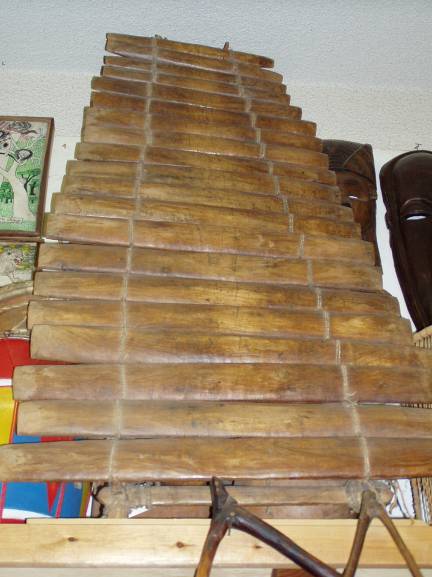
I also have photos of African instruments taken recently in the Village
Music Store in Claremont, California but could not include any due to
limit on file size for upload.
African music found its way to the Carribeans and America through slaves and
eventually had very strong development of Jazz, Rhythm and Blues and other
African American music forms. Even South Africa
developed its own style of jazz called ‘jive’. It was popularized by the release of the
album “Graceland” which contained performances by Paul Simon in Zimbabwe
in 1986. Wikepedia described the album: “Much
of the album was recorded in South
Africa and featured many South African
musicians and groups. Simon faced accusations that he had broken the cultural
boycott imposed by the rest of the world against the apartheid regime in South Africa.
This view was not supported by the United Nations Anti-Apartheid Committee, as
the album showcased the talents of the black South African musicians while
offering no support to the South African government. The worldwide success of
the album introduced some of the musicians, especially the vocal group Ladysmith Black Mambazo, to global
audiences of their own.” In the
beginning, South African musicians did not like the Simon album because they
claimed it distorted the original form of music culture. But, when the album became so popular
worldwide, it became well accepted, especially when it brought popularity and
fame to South African performance groups.
Miriam Makeba first came to the public's attention as a featured vocalist
with the Manhattan Brothers in 1954. She soon left to record with her all-woman
group the Skylarks while touring Southern Africa
with Alf Herberts' African Jazz and Variety, an 18 month tour that launched the
careers of many African artists.
In 1959, Makeba's incredible voice gained her the lead role in the show,
King Kong, a Broadway-inspired South African musical. She then gained America
recognition when she sang at President Kennedy's birthday. She also worked with Harry Belafonte in New York creating such
classics as "The Click Song"
and "Pata Pata",
which means “Touch, Touch”. Most people
remember her singing “Pata, Pata” – or “Patha, Patha.”
In 1963, she testified before the United Nations on apartheid. As a result the South African government
revoked her citizenship and right-of-return. She stayed in the U.S. and married Stokely Carmichael,
a Black Panther leader. After harassment by U.S.
authorities she went in exile in Guinea.
Makeba returned to world prominence when she performed with Paul Simon on
the Graceland tour. Finally in December, 1990,
after Nelson Mandela was released from jail, she returned to her homeland as a
free South African.
Her music brings pride and recognition to the Xhosa - Bantu speaking
people of southern Africa. The language includes the clicking (clucking)
sound that sound sharper than a wood clapper percussion instrument. This can be heard in her performance of “The
Click Song.”
Work Cited
“AFRICA - The Garland Encyclopedia of World Music”,
Vol. 1. Ed. Stone, Ruth
M.
New York and London: Garland Publishing, Inc., 1998.
A History of African Music. Sept 20, 2007 <http://www3.telus.net/africanmusic/histmain.htm>.
African Music Encyclopedia: Miriam Makeba.
Sept 20, 2007 <http://www.africanmusic.org/artists/makeba.html>.
Cape
Town South
Africa : Miriam Makeba:
A True South African Legend. Sept 20, 2007 <http://www.capetownmagazine.com/pulse/Music-Surprise~c1/Miriam-Makeba-A-True-South-African-musical-legend~7>.
Graceland (Album) - Wikipedia, the free encyclopedia. Sept 20, 2007 <http://en.wikipedia.org/wiki/Graceland_%28album%29>.
Music of Africa - Wikipedia, the free encyclopedia. Sept 20, 2007 <http://en.wikipedia.org/wiki/Music_of_Africa>.
South Africa - Wikipedia,
the free encyclopedia. Sept 20, 2007 <http://en.wikipedia.org/wiki/South_africa>.
South African music -
SouthAfrica.info. Sept 20, 2007 <http://www.southafrica.info/ess_info/sa_glance/culture/music.htm>.
YouTube - Miriam Makeba - Pata Pata.
Sept 20, 2007 <https://www.youtube.com/watch?v=kCc61z9IFu4>.
YouTube - Miriam Makeba - The Click Song. Sept 20, 2007 <https://www.youtube.com/watch?v=2Mwh9z58iAU&mode=related&search=>.
YouTube - Graceland-Paul Simon Concert in Zimbabwe. Sept 22, 2007 <https://www.youtube.com/watch?v=dXgQtL3aEmQ>.
YouTube - Paul Simon &
Miriam Makeba African Concert - Graceland - Under African Skies - Bajo los
cielos de Africa Sept 20, 2007 <https://www.youtube.com/watch?v=W83H8aUL0tw>.
Appendix
Photos of South African instruments :-
Ankle Rattle, Hand
Rattle,
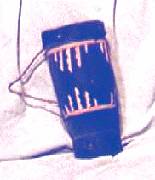
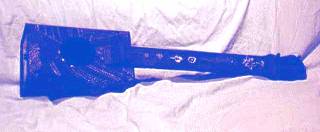
Ornamental Drum, Ramkie
(4-string instrument),

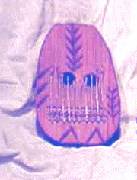
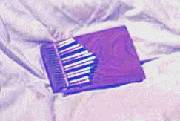
Side-Blown Horn, Thumb
Pianos,
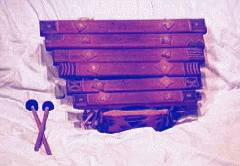
Xylophone
Photos of African Instruments
Taken in the Village Music Store, Claremont,
California